environment

Photo: J.D. Hillard

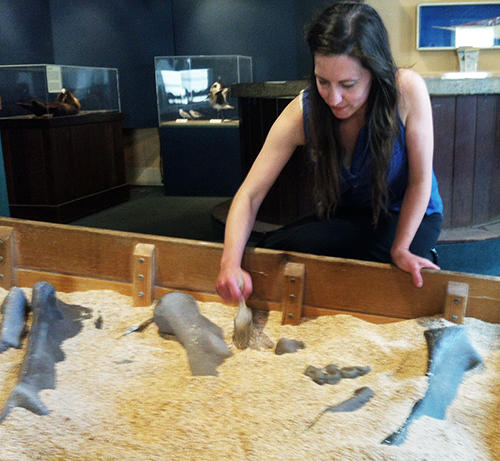
The Santa Cruz Museum of Natural History has been celebrating 110 years of education people about the regions natural environments. Recently museum staff helped create this short radio tour ahead of the main event on August 22.

Visitors to Seabright Beach in Santa Cruz probably notice the concrete sculpture of a Gray whale across the street from the beach entrance. Just a few feet uphill from the whale stands one of Santa Cruz’s oldest institutions.

Bigger Than a Whale

As many as 22-million cats are owned as pets in California, according to the American Veterinary Medical Association … many of whose members are cat owners themselves. And while cats generally bring pleasure to their owners, cat-waste poses a health threat to humans and wildlife.

Dr. Melissa Miller of the California Department of Fish and Wildlife is a career veterinarian who FIGURATIVELY takes her work home with her.

Keeping a Sanctuary Clean

May 6, 2015
Photo: Rex Sanders


On a Saturday in April, more than 25 enthusiastic volunteers turned out to clean up the trails and roads around Elkhorn Slough, just inland from Moss Landing. The slough is the second largest coastal estuary in California, and home to endangered species including the sea otter and the Santa Cruz long-toed salamander. Twice a year volunteers and staff fill a giant 30 or 40 yard dumpster with garbage from trails and roadsides.

Wes Sims

There’s a tiny amount of mercury in a lot of our food. Scientists at U.C.S.C. and Moss Landing Marine Labs have figured out some of it arrives in fog. KUSP’s Wes sims reports they now want to know how it go into the fog.

“Our laboratories made a unique discovery, and that is that fog water contains 400-times the concentration of methyl mercury than rainwater.”

Colorful Nudibranches a Sign of Warmer Waters

Feb 5, 2015
Jeff Goddard

  Warmer ocean temperatures have brought the nudibranch, a bright pink, inch-long sea slug to central and northern Pacific coast tide pools. After a report from the late 1970s tied nudibranch population swells to warmer water temperatures, researchers, including UC Santa Cruz professor emiritus of ecology and evolutionary biology John Pearse, predicted they would see the sea slug in recent periods.

After most species of sea stars on the west coast suffered massive die-offs in 2013, researchers say there’s some hope for recovery.

Scientists still don’t understand why sea stars from Mexico to Canada started dying off. But the disease, which is called “sea star wasting syndrome” has affected most species and in many locations killed off a majority of sea stars, says Peter Raimondi, who studies marine ecology at Long Marine Lab in Santa Cruz.

“It’s unlikely you’ll go to a location and not find any sea stars but the numbers are fractions of what they used to be.”

Steve Laufer

This week Watsonville’s City Council approved new restrictions on water use following an emergency mandate issued by Governor Jerry Brown last month.

The emergency measure was aimed at reducing outdoor water use in urban areas. A lot of water districts have a variety of restrictions already, the mandate specifies all districts have to adopt measures such as prohibiting watering that causes runoff or washing cars without a nozzle that shuts off.