Specials

Climate One: Preparing for Weather Whiplash

This program is dated March 3, 2015.

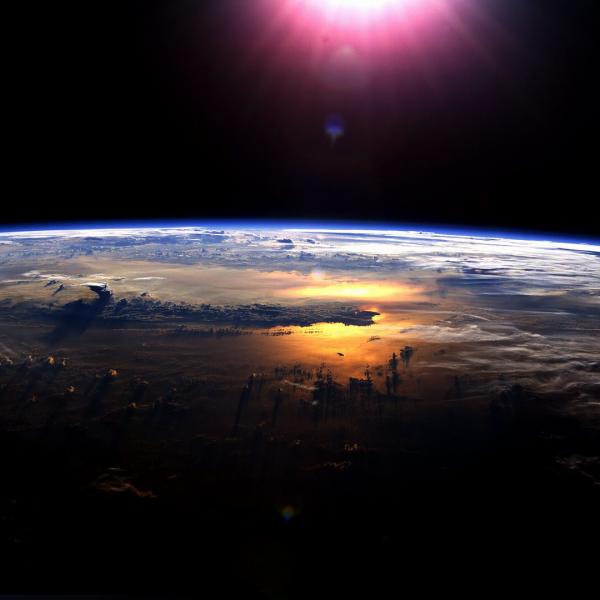
If anybody has seen the big picture when it comes to climate, it’s Kathryn Sullivan.  As a former NASA astronaut and the first woman to walk in space, she’s gotten more than a bird’s eye view.

“When you get even a couple hundred miles away and look back the planet you get a really different sense of proportion,” she marvels. The atmosphere we depend to survive on looks “like the fuzz on the tennis ball. It’s remarkably thin…a little fluid membrane that envelops this ball of dirt and makes it habitable.  It’s very elegantly and finely structured.”

It’s an elegance that the public first glimpsed in the famous , taken in 1968 by Apollo 8 astronaut William Anders.  This new perspective on our home planet helped shape our understanding of the effects we humans were having on it, and spurred the environmental movement.

SPEAKERS

Deputy Director, California Governor’s Office of Planning and Research

Director of Strategic Communications, Climate Nexus

Administrator, National Oceanic and Atmospheric Administration

“We are the first generation of human beings ever in the history of humankind that has the ability to comprehend and measure our planet with satellites and other instrumentation,” says Sullivan, who now heads up the National Oceanic and Atmospheric Administration (NOAA).  “We can essentially take a snapshot of global conditions, oceanic conditions, atmospheric conditions.  And this has what’s made it possible for us to have the kind of forecasting we have in weather forecasting and longer range outlooks. “

The outlook for California is sobering, according to Louise Bedsworth of the state’s Office of Planning and Research.  California has seen its share of recent extreme weather events, including the 2013 Rim Fire, which burned over 250,000 acres and impacted tourism and other businesses throughout the region.  And there’s more to come this year as the summer heats up.

“I think probably one of our biggest impacts of concern is going to be the effect on the state’s water supply,” Bedsworth warns.  While the amount of precipitation is hard to predict, “we’ll have more of that precipitation as rain than as snow, so that is going to really impact the state’s water supply.

We also know that we’ll see more extreme events, more large destructive wildfires, severe droughts and heat waves.”

And it’s not just California that’s feeling the heat.  According to NOAA’s latest , the frequency of extreme weather events, from hurricanes and floods to wildfires and drought, is on the rise across the country.  We know that climate change is causing this weather whiplash, but how?  Kathryn Sullivan describes it as “kitchen table science.”

“The energy that drives weather in our planet is the heat coming in from the sun, the moisture content of the atmosphere, and obviously the rotation of the earth all of the swirling that that introduces,” she explains.  “So we’re dialing up the extra heat in the atmosphere…when you heat up the water, the relative humidity in a hot atmosphere can be much higher than in the cooler and drier atmosphere.

“It’s really stovetop science working on the planetary scale.”

This global chemistry experiment has given birth to some familiar names in the news:  Superstorm Sandy.  Hurricane Katrina.  Winterstorm Juno.   While the practice of naming our weather has been criticized as media hype, Hunter Cutting of communications firm Climate Nexus says it’s actually helpful to the average viewer. “If you give something a name, it’s a character in the story,” he says.  “Scientists work with numbers and formulas.  Average folks tell stories…then that story can be expanded to talk about what causes storm, what changed the odds of the storm happening. That’s how you can bring climate change into the conversation.”

Human, plant and animal migration is an important, if less dramatic, part of the climate story, adds Kathryn Sullivan.

“Disease patterns are migrating.  The hay fever seasons have already expanded by up to 26 days” throughout North America, she says.  Biologists have observed growing seasons changing all around the globe.  “Human migrations are also being observed, and are very much a concern of national security officials in many, many, many countries.”  Sullivan cited a recent National Academy of Sciences study that draws a link between .

When it comes to escaping disaster, Sullivan emphasizes that it’s not about location – it’s about community.  The word “resilience,” she says, has three strands:  “It’s societal, it’s economic and its ecological resilience.  You’ve got to be looking at all three, you’ve got to be weaving all three, or the notion is meaningless.”

So, “adaption or mitigation?” asked one audience member.  Which strategy will better ensure our survival?  Hunter Cutting believes that with the temperature projected to increase by up to eight degrees, we can – and should – do both.

“It’s a bit of a balancing act, right?” he replied. “Eight degrees may not sound like much.  But that’s about the amount of temperature change that we saw that ended the last Ice Age, and we’d have crocodiles living in the Arctic. So we really don’t want to go there.”   Reducing emissions will help keep that number down, but what’s a manageable number?

“Two degrees…we can adapt to that much,” he concludes.  “So I think we have to do both.  We have to mitigate to avoid the catastrophic, and adapt to what we can’t avoid.”

And change, Cutter points out, is one of the signature characteristics of our species.

“Adaptation is just going to be part of what we do now going forward in the future.”

Related Links:

Climate One: Green Asia


(Transcript also available by clicking LISTEN link.)

This program was posted by ‘Climate One’, July 16, 2015.

Industrialize now, clean up later – that’s long been the philosophy behind Asia’s booming economies. Dirty air, foul water, and hellishly overcrowded cities have threatened to choke the region’s impressive prosperity. But the tide is starting to turn. “The dynamic in China is unbelievable,” says Mark Clifford. “Chinese manufacturers are changing the world in solar, in wind, in electric cars”. Read the rest of this entry »

Climate One: Cli-Fi, 2015

This program was recorded February 11, 2015.

Photo: http://climateone.org

Photo: http://climateone.org

Host: Greg Dalton
Guests: Jason Mark, Editor, Earth Island Journal; Kim Stanley Robinson, Author, 2312 (Thorndike Press, 2015)

Novelists and filmmakers have been mining the rich world of science for generations. Throughout the last century, science fiction has turned to real-world threats, such as nuclear war and plague, for its post-apocalyptic scenarios. More recently, environmental issues have moved to front and center in the narrative, in films such as Interstellar, Snowpiercer and Wall-E and best-sellers from Margaret Atwood, Nathaniel Rich and Jennifer Egan.

H.G. Wells foreshadowed this trend in his 1895 novel The Time Machine. But while the prospect of a devastated earth in a far distant future probably didn’t inspire many Victorians to recycle, today’s readers can clearly visualize a much more immediate threat. Climate change is more than a plot device – the signs are all around us. Can Cli-Fi help rally the troops in our battle to save the planet?

Read the rest of this entry »

Climate One: Climates and Lawns

This program was posted by ‘Climate One’ in June, 2015.

(Transcript also available by clicking LISTEN link.)

Guests:

, Senior Fellow and Center Director, Public Policy Institute of California;
, Chair, State Water Resources Control Board;
, President, California Farm Bureau Federation;
, Director, Ward 3, East Bay Municipal Utility District Board

“Droughts come and go,” began Greg Dalton at a recent Climate One discussion on California’s water wars. “Is this one different, or do we ride it out and then go on with our lives?”

“This is the biggest wake-up call in modern times,” Felicia Marcus of California State Water Resources Control Board responded.  She went on to list the reasons for the severity: a serious reduction in snowpack, millions more humans turning on the tap, increased agricultural demand and endangered species and habitats are creating what amounts to a real-life, slow-motion disaster movie, “on just about every front you can think of.”

Read the rest of this entry »

Climate One: How We Roll

This program was posted by ‘Climate One’ in June, 2015.

(Transcript also available.)

It might be a stretch to imagine most Americans giving up their beloved Malibus, Mustangs and Broncos. But for those who would just as soon leave the car at home, there are more options than ever. With a growing menu of ala carte wheels to choose from, it’s up to us to decide how we want to roll around our cities. .

how-we-roll

Related links:

Climate One: William Reilly on the Pope’s Environmental Messege

This program was posted by ‘Climate One’ in June, 2015.

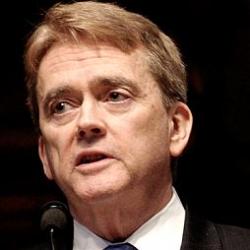
William K. Reilly; Senior Advisor, TPG. Courtesy of http://climateone.org/

William K. Reilly;
Senior Advisor, TPG. Courtesy of http://climateone.org/

Bill Reilly, Senior Advisor at TPG, discusses the Pope’s message in his environmental encyclical. “I think the surprise is that his message is on several planes, it’s on the plane certainly of theology and morality.

It also gets very close to the realm of policy and action. It calls out people who are not accepting climate change and suggest that indifference or excessive belief in the technical solution or just opposition to science is unacceptable on a moral plane,” said Reilly.

Climate One: The Carbon Bubble

This program was posted by ‘Climate One’ on May 12, 2015.

As supply grows and demand decreases, oil prices are dropping by the barrel. Are we truly in a “carbon bubble”? What can we do to protect our investments?

Kurt Billick, Chief Investment Officer, Bocage Capital
Anthony Hobley, CEO, Carbon Tracker Initiative
Anne Simpson, Director of Global Governance, CalPERS

Climate One -
Dr. Sylvia Earle: One Big Ocean

This program was posted by ‘Climate One’ on May 27, 2015.

Photo: Courtesy of climate-one.org

Photo: Courtesy of climate-one.org

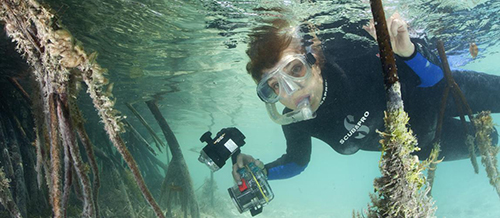
When Dr. Sylvia Earle, dubbed “Her Deepness” by the New York Times, began her undersea career in the 1960’s, female scientists were regarded as a novelty. In 1970 she joined , an all-female research team living 50 feet below the sea surface in the Virgin Islands for weeks on end. A film clip from the era referred to Earle’s team of aquanauts, quaintly, as “the world’s first real-life mermaids.”

“I wasn’t trying to knock down barriers,” Earle remembers. “I responded to a notice that was on the bulletin board when I was at Harvard…it just didn’t say that women need not apply.” So while space travel and moonwalking was, seemingly, the province of men only, women were welcome in the world of undersea exploration.

Read the rest of this entry »

Climate One Climate Cognition

This program was recorded live at The Commonwealth Club in San Francisco on May 12, 2015.

A sociologist, a linguist and an economist walked into the Commonwealth Club, and…it sounds like the first line of a joke, but it was actually the start of a wide-ranging discussion of the sociological, psychological and economic underpinnings of climate awareness – and denial.

In her book “Living in Denial: Climate Change, Emotions and Everyday Life,” sociologist Kari Norgaard profiled a rural community in Norway during an unusually warm winter. Ice fishing and the ski industry were both negatively impacted, yet its citizens did nothing collectively to respond to an economic disaster that was clearly the result of global warming. Norgaard finds this sense of denial paralleled in other well-off, well-educated Western nations, including the United States.

“It’s the most serious, very complex problem,” Norgaard says about climate change. “It’s threatening to our fossil fuel based economy, it’s threatening to our political systems…it’s threatening to our sense of the future, meaning, cultural norms, so many different things.” And yet it appears we as a society have failed to develop any meaningful response.

It was during one of her classes at the University of Oregon that Norgaard got the inspiration to explore the way society has responded to climate change. She observed the way some students reacted emotionally to a disturbing film, while others remained impassive. “It got me thinking about how it is that we receive and process really disturbing information, and the idea that in fact when information is really disturbing, one of our reactions can be to shut down.”

Linguistics professor George Lakoff believes that for each of us, our own personal world view gets in the way. For many, this leads to climate denial. “When you have facts that come in that won’t fit the way that you understand the world, then the way you understand the world is not gonna change. The facts will be either ignored, ridiculed or attacked…it’s like it’s not even a fact.”

Surprisingly, “people were actually more concerned about global warming in 1989, twenty-five years ago, than they are today,” says Per Espen Stoknes, an economist and psychologist. Since then, he says, the scientific narrative has put distance between us and climate change, dulling our sense of urgency. “It’s distant in time, distant in space and then distant in social impact. It’s always impacting somebody else that I don’t know …and we know that empathy is decreasing with increasing social distance.”

Perhaps distance leads to denial. But no matter the reason, Norgaard sees a problem more serious than that: climate awareness combined with inaction. “The fact that people who do get it, who do see what’s happening and believe it, are not mobilizing to a greater extent. I think that is by far the more serious problem.”

“We do need a political leadership,” she continues, “but we also need discourses about how we can be citizens and enact that caring, responsibility towards each other and the kinds of things that all of us can do to move our society forward.”

There are those who don’t believe that individual action matters. And in Stoknes’ view, they’re right. “Individual actions will never solve the climate problem, that’s what I’m saying as a psychologist,” he asserts. “However, it does have huge social ripple effects.” By acting as individuals, and getting acknowledgment from others, he says, we reinforce the idea of effecting change as a social norm. “So it does have a social, cultural effect, even if individual action will never solve the climate problem itself.”

Taking the conversation public is one way to move the needle, says Norgaard. “We need to have discourses about what it means in our place, how the things that we are seeing are about climate change…all of these different ways that we can make climate change visible in public space: letters to the editor, all of these kinds of things matter. Just talking about it in simple conversation helps to make it real, which is part of how the democratic process needs to work.”

For those who have a hard time framing that conversation, Stoknes suggests several approaches. One topic that hits home for nearly everyone is health. “Health of people, your family, your children, the community and also health of the forests or the health of the water system,” he adds. “That really makes it feel personal, near, urgent and here.” Ethical and economic issues also push buttons and prick up ears. Pope Francis himself has spoken out against the moral perils of global warming. And while climate change and the disasters it spawns mean billions of dollars lost, there is also opportunity around the corner for those who would dive into the new energy economy.

“Health, risk, morals and opportunities, these are the ways to speak about the climate,” Stoknes concludes. “So please join us!”

Host: Greg Dalton

Guests:George Lakoff, Professor of Linguistics, UC Berkeley; Author, Don’t Think of an Elephant! Know Your Values and Frame the Debate (Chelsea Green, 2004);
Kari Norgaard, Associate Professor of Sociology, University of Oregon; author of Living in Denial: Climate Change, Emotions and Everyday Life (MIT Press, 2011);
Per Espen Stoknes, Economist; Psychologist; Author, What We Think About When We Try Not to Think About Global Warming (Chelsea Green, 2015)

Related links:

Kari Norgaard: Living in Denial:

Per Espen Stoknes:

George Lakoff:

Climate One: Hacking the Climate

This program was recorded live at The Commonwealth Club in San Francisco on May 8, 2015.

Imagine Superman flying through the clouds, spraying a mist that reflects the sun’s rays and cools the earth.  Sounds like science fiction – but scientists are indeed studying this and other ways to alter the atmosphere and fight global warming.  Whether you call it geoengineering, comic book fantasy or “hacking the sky,” the idea is getting serious consideration.

Stanford geoengineering expert Ken Caldeira first heard the concept broached during a climate summit in 1998, by astrophysicist Lowell Wood. “His idea was to offset the effects of increased greenhouse gas concentrations by reflecting some of the sun’s warming rays back to space,” Caldeira remembers.  “And I thought that this would make no sense and wouldn’t work…And we came back and did some computer model simulations using climate models. It turned out, much to our surprise, that it worked quite well!”

Jane Long co-chairs the Task Force on Geoengineering at the Bipartisan Policy Center. She explains that the panel was formed at the request of the US government, “because they wanted to hear from scientists about whether or not this was a good idea…and lo and behold, it wasn’t just scientists actually. We had people that were diplomats.  We had political scientists.  We had ethicists on this panel.” The unanimous conclusion, she reports, was “that we needed to start looking into this technology.”

Physicist Armand Neukermans is part of a team that has been exploring what he calls “marine cloud brightening,” based on an idea by atmospheric scientist John Latham.

Adding water droplets to clouds makes them brighter, Neukermans explains, enabling them to reflect more light. “The idea is that if you would help by a natural means to bring more droplets in there, nuclei as they call it, they will become droplets too. The clouds will lighten…this is a relatively simple idea that basically uses the clouds like a mirror.”

It sounds clever enough. But even if it does work, could there be unexpected complications?  What are the technical, moral and political implications of tinkering with Mother Nature?

Albert Lin, professor of law at UC Davis, says the idea is definitely controversial “because it’s talking about potentially trying to affect, influence the climate at this very broad scale, akin to perhaps you could say playing God. And the question is, of course, who would do this?”

The question of who would control the technology – and be responsible for its consequences – should be made by the international community as a whole, says Lin.  But the controversial aspect may be one reason that spray-painting the sky remains in the experimental stage.  Are researchers waiting for a “social license” in order to move ahead?

According to Long, it all comes down to funding. “I think there’s quite a few people who are ready to do small scale, very low risk experiments that are looking at actually how the chemistry and the physics actually occurs,” she says.  “They’re ready to go, but there’s no money.  It’s the government that is holding back on the social license.”

Private funding could save the day — Bill Gates has reportedly expressed interest in putting money towards the geoengineering of climate solutions.  But, Long cautions, it’s important to keep such research in the public eye.

“Because as we move from very, very small-scale research with literally no physical risks associated with it,” to larger-scale operations, “say over 1,000 kilometers or something like that, 1000 miles — you wouldn’t want that kind of research to be done unless it was publicly available, publicly governed and was totally transparent to the public about what was being done and why it was being done.”

Some see a risk that this technology, like nuclear power, could be turned against us if it falls into the wrong hands. “There are some parallels with nuclear technology,” Lin agrees. “You could see some of the technology that’s being developed here potentially being used in a military way, or at least in a way to disadvantage one’s neighbors whom one disagrees with.”

And while the potential hazards to our atmosphere might give pause to some, others might argue that our very presence on earth is already affecting the planet. “We all changed the climate a little bit today in our activities, but we did it unintentionally,” says Long.

“But the fact is that we are entering a time in the earth’s history where we can’t avoid that intentionality.  We know now that we’re changing the climate. And so the idea of thinking about this…may bring us to a place where we actually do a better job of that intention, of managing this planet.”

“I think there’s often an assumption that deployment of these technologies will be widely unpopular,” says Caldeira. “But if you’re in Phoenix and it’s getting to be 120 degrees and there is no rain, and somebody spraying some seawater off of Los Angeles can make you have cooler weather and moister weather,” there’s many who would welcome it.

“We don’t really know how bad climate change will get,” Caldeira continues. “But if it really does turn out to be catastrophic, there could be real demand to do something quickly.”

On the question of morality, Long is adamant. “I think it’s immoral not to do it,” she asserts. “I think we have to take responsibility for the earth, because that’s where we all live and because that’s where our children and their children are going to live.  And so the need to learn how to take responsibility is paramount in our survival.

“Are we doomed?  We’re not doomed — if we take responsibility.”

Host: Greg Dalton

Guests: Ken Caldeira, Atmospheric Scientist, Carnegie Institution for Science, Stanford University;
Albert Lin, Professor, UC Davis School of Law;
Jane Long, Co-chair, Task Force on Geoengineering, Bipartisan Policy Center;
Armand Neukermans, Physicist and Inventor

Related Links: